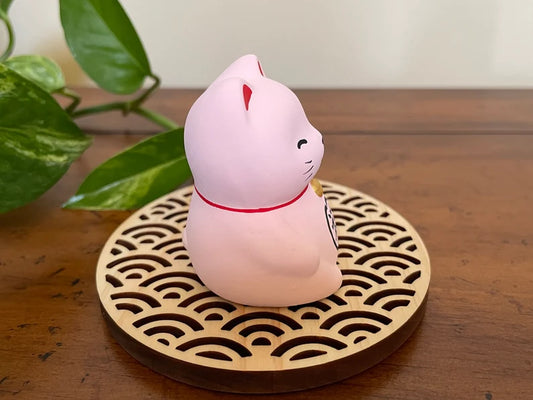
🐱 Why Are Cats Such Japanese Favourites?
Cats hold a special place in Japanese culture, appearing everywhere from shop windows and home shelves to ceramics, textiles, and popular design motifs. Long before cats became internet famous around the world, Japan had already embraced them as symbols of good fortune, protection, and charm.
Part of this affection comes from history. Cats were traditionally valued in Japan for protecting silk production and grain stores from mice, making them practical companions as well as beloved pets. Over time, this appreciation grew into something more symbolic, and cats became woven into folklore, temple legends, and everyday design.
Today, the most recognisable expression of this is the Japanese lucky cat, a small ceramic figure with one paw raised, found in homes, restaurants, and shops across Japan and increasingly around the world. But cats appear far beyond this iconic figurine, decorating bowls, mugs, plates, chopstick rests, and other everyday tableware that brings a touch of Japanese charm to daily life.
Whether you're looking for a traditional Maneki Neko figurine or beautifully crafted cat-themed Japanese tableware, exploring our Maneki Neko Collection and Cat Lovers Collection is a wonderful way to bring this rich tradition into your own home.
Understanding why cats hold this special status makes it easier to appreciate just how much thought and tradition sits behind designs that might otherwise seem simply cute.
🙌 What Is the Japanese Lucky Cat?
The Japanese lucky cat, known as maneki-neko in Japanese, is a small figure, usually ceramic, shown sitting upright with one paw raised in a beckoning gesture. Its name translates roughly to "beckoning cat," reflecting the belief that the raised paw is calling in good fortune, customers, or wealth toward its owner.
You'll often see the lucky cat displayed near the entrance of shops, restaurants, and businesses across Japan, usually on a small shelf or counter where it can be easily seen by everyone who walks in. At home, it's just as commonly placed to bring a sense of warmth, luck, and welcome to a space.
While it's often mistaken for a purely decorative object, the lucky cat carries genuine cultural weight. Its pose, colour, and even which paw is raised all carry specific meaning, details we'll explore in the sections ahead. Far from being just a cute figurine, it's a small piece of living folklore that continues to be part of everyday Japanese life.

📜 The History & Legends Behind the Lucky Cat
The exact origin of the lucky cat is difficult to pin down with certainty, as several legends have grown up around it over time, but most trace back to the Edo period (1603 to 1868).
One of the most well-known stories is associated with Gōtoku-ji, a small temple in Tokyo. According to the tale, a poor priest at the temple kept a cat despite having barely enough food for himself. One day, a wealthy lord was caught in a storm near the temple and took shelter under a tree. He noticed the temple's cat raising its paw, almost as if beckoning him inside. Curious, he followed the cat, and moments later lightning struck the very tree he had been standing under. Grateful to have been spared, the lord became a patron of the temple, and the beckoning cat came to be seen as a bringer of good fortune. Gōtoku-ji still displays thousands of lucky cat figurines today, left by visitors as tokens of thanks.
Other regional legends offer slightly different versions of the story, often involving a cat saving its owner from misfortune or attracting wealth to a struggling shop. While the details vary, the common thread across all these tales is the same: a cat's simple gesture bringing luck to someone in need.
By the late Edo and early Meiji periods, lucky cat figurines had become popular items sold at temples, festivals, and shops, and their popularity has continued largely unchanged ever since.
🎨 What Do the Colours Mean?
While the classic white lucky cat is the most recognisable, lucky cats come in a range of colours, each carrying its own traditional meaning.
| Colour | Traditional Meaning |
|---|---|
| White | Good luck, happiness and purity. The classic choice for any home. |
| Gold | Wealth, prosperity and financial success. A popular choice for businesses and home offices. |
| Black | Protection from bad luck and negative energy. Often displayed near entrances. |
| Red | Good fortune, protection and positive energy. Traditionally associated with strength and vitality. |
| Green | Health, personal growth and academic success. A thoughtful gift for students or new beginnings. |
| Pink | Love, friendship and happy relationships. Perfect for a meaningful gift. |
| Blue | Calmness, wisdom and success in learning or career. |
| Purple | Good fortune, ambition and personal achievement, making it a unique choice for collectors. |
✋ Left Paw vs Right Paw: What's the Difference?
Beyond colour, the raised paw itself carries its own meaning, and this is one of the most commonly misunderstood details of the lucky cat.
A raised left paw is traditionally believed to invite customers and people into a space, making it a popular choice for shops, restaurants, and businesses hoping to draw in visitors.
A raised right paw is traditionally associated with inviting wealth and good fortune, making it a common choice for homes or businesses focused on financial prosperity.
Some lucky cats raise both paws, a design believed to combine both forms of luck at once, drawing in people and money together. This double-pawed version has become increasingly popular in recent years, particularly as a gift.
There's also a subtle detail some collectors pay attention to: the height of the raised paw. A higher paw is sometimes said to invite luck from further away, while a lower paw suggests luck closer to home, though this detail carries more of a folk interpretation than a strict rule.
Understanding this small distinction helps when choosing a lucky cat with real intention, rather than just picking whichever design looks most appealing.
🏺 Cat Motifs in Japanese Design & Tableware
Beyond the classic lucky cat figurine, cats have found their way into a much wider range of Japanese design, particularly in ceramics and everyday tableware.
Cat motifs appear on mugs, tea cups, small bowls, and plates, often rendered in a playful, minimalist style that fits naturally into everyday use rather than pure display. A simple line drawing of a cat's face on a tea cup, or a small paw print glazed into the base of a bowl, brings a touch of the same charm and good fortune associated with the lucky cat into daily routines.
This crossover between folklore and function reflects a broader theme in Japanese design: symbolism doesn't need to be separate from everyday objects, it can be woven directly into the things you use every day. A cat-motif mug used for morning coffee, or a small cat-shaped chopstick rest, carries the same spirit of warmth and good luck as a traditional figurine, just in a more subtle, everyday form.
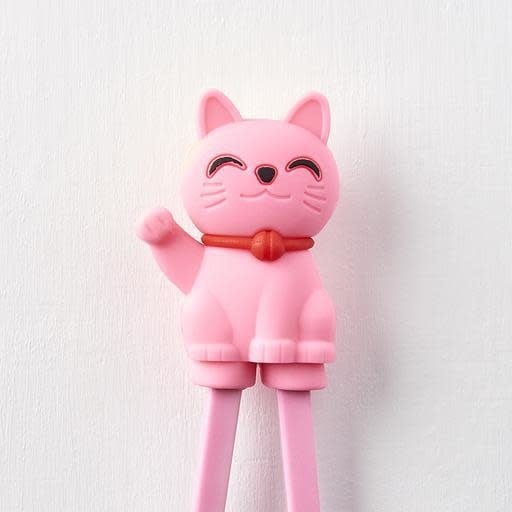
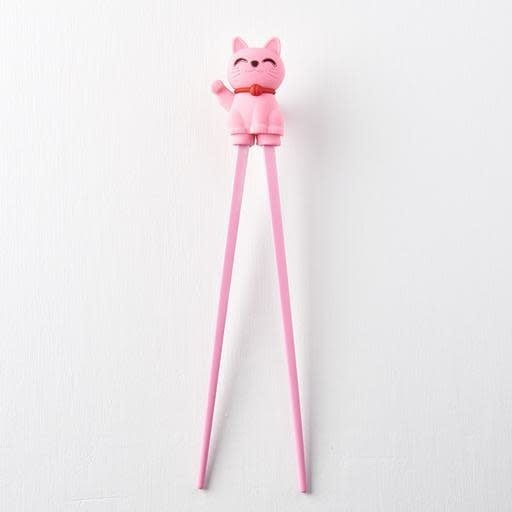
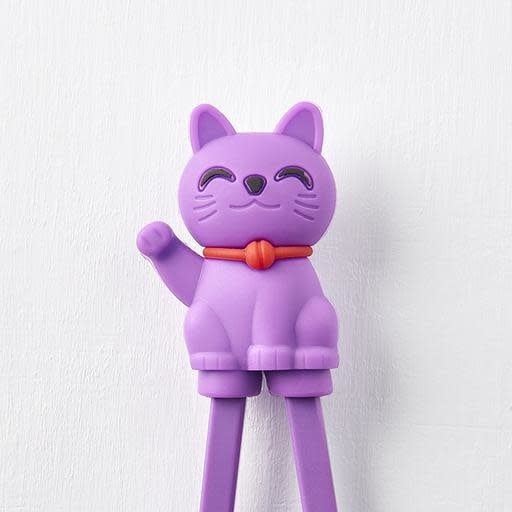
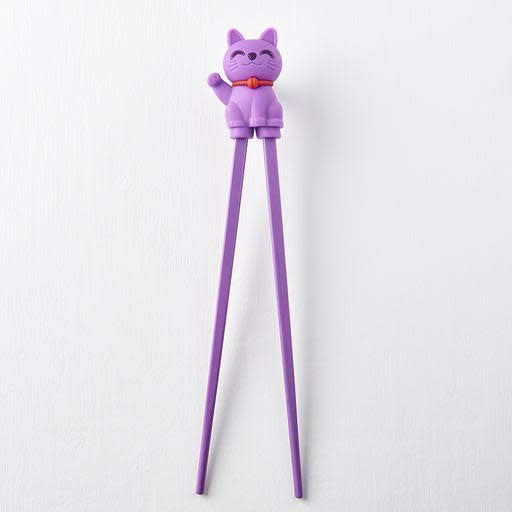
Cat designs are especially popular for children's items, and kids trainer chopsticks are a great example. Often topped with a small cat face or paw design, these chopsticks are designed to help children learn proper grip and technique, while the playful cat motif makes the learning process feel more fun and approachable rather than frustrating.
For collectors and gift buyers alike, cat-motif tableware offers a lighter, more versatile way to bring this symbolism home, whether as a standalone piece or alongside a traditional lucky cat figurine.

🏠 How to Use a Lucky Cat at Home
Bringing a lucky cat into your home is simple, but a few traditional guidelines help you get the most meaning out of it.
Placement near the entrance. The most common placement is near the front door or entrance, facing outward, so the raised paw appears to welcome luck and visitors into the home.
Consider the room's purpose. A gold or right-paw cat works well in a home office or near where finances are managed, while a pink cat suits a bedroom or personal space associated with relationships.
Height matters, a little. Placing your lucky cat at eye level or slightly above is traditionally seen as more effective than tucking it away on a low shelf, since it should feel like a visible, welcoming presence.
Keep it visible and cared for. Unlike some decorative items, lucky cats are traditionally meant to be seen and appreciated, not hidden away, a light dusting and an occasional repositioning is part of keeping its good fortune active.
Pair with intention. Many households choose to combine a lucky cat with other symbolic pieces, such as cat-motif tableware, creating a subtle, cohesive theme throughout the home rather than a single standalone item.
There's no strict rulebook here, ultimately, a lucky cat is most effective when it's placed somewhere you'll genuinely enjoy seeing it each day.
🛍 How to Choose the Right Lucky Cat
With so many colours, poses, and sizes available, choosing a lucky cat comes down to a few simple considerations.
Decide what kind of luck you want to invite. Use the colour guide from earlier as your starting point, white for general happiness, gold for wealth, pink for love, or calico for an especially lucky, all-round choice.
Choose your paw. A left paw suits those wanting to welcome more people and connection into their life or business, while a right paw leans more toward financial prosperity.
Think about scale. Larger figurines make a stronger visual statement near an entrance, while smaller versions suit shelves, desks, or as part of a curated display alongside other pieces.
Consider it as a gift. Lucky cats make especially thoughtful housewarming or new business gifts, and pairing one with cat-motif tableware creates a lovely, cohesive gift set.
Let craftsmanship guide you. Handmade or higher-quality ceramic pieces tend to carry more character and make a more meaningful long-term addition to a home than a mass-produced version.
Our top picks:
- A classic white lucky cat for an entryway or shelf
- A gold cat for a home office or business space
- A calico lucky cat as a special, extra-fortunate gift
- A cat-motif mug or bowl to pair alongside your figurine
Choosing thoughtfully, rather than picking the first design you see, makes the piece feel like a genuine part of your home rather than just an ornament.

❓ FAQ
What does the Japanese lucky cat actually mean?
The lucky cat, known as maneki-neko, is believed to bring good fortune, protection, or prosperity to its owner, with its raised paw symbolising an invitation for luck to enter.
What is the difference between a left paw and right paw lucky cat?
A left paw is traditionally believed to invite people and customers, while a right paw is associated with inviting wealth and financial luck.
What colour lucky cat is the luckiest?
While white is the most traditional and widely used, calico, or tri-coloured, cats are traditionally considered the luckiest of all in Japanese folklore.
Where should I place my lucky cat at home?
Most people place their lucky cat near the entrance, facing outward, so it appears to welcome luck and visitors into the home.
Is the lucky cat the same as a Japanese bobtail cat?
Not exactly. The lucky cat figurine is often inspired by the Japanese Bobtail, a real cat breed known for its short tail, but the figurine itself is a symbolic design rather than a depiction of one specific breed.
Can I give a lucky cat as a gift?
Yes, lucky cats make popular gifts for housewarmings, new businesses, or celebrations, and are often paired with cat-motif tableware for a thoughtful gift set.